In today’s rapidly evolving tech landscape, power efficiency in digital circuits is more critical than ever. With devices becoming smaller and more powerful, mastering power analysis isn’t just a nice-to-have skill—it’s essential for optimizing performance and extending battery life.

Whether you’re designing cutting-edge processors or everyday gadgets, understanding how to accurately analyze and manage power consumption can make all the difference.
Join me as we dive into proven techniques that not only enhance circuit efficiency but also help you stay ahead in this competitive field. Let’s unlock the secrets to smarter, greener electronics together!
Understanding the Foundations of Power Consumption
Dynamic vs. Static Power: What Drives Energy Use?
When we talk about power consumption in digital circuits, it’s crucial to differentiate between dynamic and static power. Dynamic power arises from the switching activity within the circuit—every time a transistor flips from 0 to 1 or vice versa, energy is consumed.
This is heavily influenced by the clock frequency and the capacitance of the circuit nodes. On the other hand, static power is the energy lost due to leakage currents even when the circuit is idle.
With modern process technologies shrinking transistor sizes, leakage has become a significant contributor to overall power consumption. I’ve noticed that in high-performance CPUs, managing static power can sometimes be trickier than dynamic power because it’s less predictable and depends on temperature and voltage variations.
How Voltage Scaling Impacts Power Efficiency
Voltage scaling is one of the most effective levers to reduce power consumption, especially dynamic power, which is proportional to the square of the supply voltage.
Lowering voltage, however, comes at the cost of reduced performance and increased delay. In my experience working with embedded systems, finding the sweet spot between voltage reduction and timing constraints is a balancing act.
Too aggressive voltage scaling can cause timing failures, while conservative scaling misses potential power savings. Techniques like dynamic voltage and frequency scaling (DVFS) have helped me implement adaptive power management that responds to workload demands in real-time.
Role of Clock Gating in Minimizing Unnecessary Switching
Clock gating is a technique I’ve often relied on to cut down dynamic power by disabling the clock signal to idle modules. Since switching activity is a primary driver of power consumption, gating the clock effectively freezes parts of the circuit when they’re not in use, preventing needless toggling.
Implementing clock gating requires careful design to avoid glitches and ensure proper synchronization. I recall one project where introducing clock gating reduced power by nearly 20% without impacting performance, proving its effectiveness in real-world scenarios.
Advanced Techniques for Accurate Power Estimation
Simulation-Based Power Analysis Tools
Using simulation tools like SPICE or power-aware RTL simulators has become an indispensable part of the design workflow. These tools allow you to estimate power consumption at different abstraction levels, from transistor-level circuits to high-level architectural models.
Personally, I find that running cycle-accurate simulations with realistic input vectors gives the most reliable power estimates. However, these simulations can be time-consuming, so balancing accuracy and runtime is something I often juggle.
Activity Factor Extraction for Precise Modeling
One of the trickiest parts of power estimation is capturing realistic switching activity, often represented as the activity factor. I’ve learned that using synthetic or worst-case activity assumptions can wildly overestimate power, leading to over-design.
Instead, profiling real workloads or using power-aware compilers to generate switching statistics results in much tighter power budgets. In my projects, integrating activity factor extraction into the verification flow has provided more confidence in power numbers and helped optimize the design accordingly.
Power Measurement on Silicon: Bridging Theory and Reality
No matter how sophisticated your simulations are, actual silicon measurements are the ultimate truth. I’ve been involved in testing chips with built-in power sensors or external measurement setups using high-precision power analyzers.
These measurements often reveal discrepancies from simulation estimates due to factors like process variation, temperature, and noise. Learning to correlate silicon data back to models has been invaluable in refining power analysis methodologies and improving future designs.
Practical Strategies to Reduce Power in Digital Designs
Leveraging Multi-Threshold CMOS (MTCMOS) for Leakage Control
Multi-threshold CMOS technology uses transistors with different threshold voltages to balance speed and leakage power. High-threshold devices leak less but switch slower, while low-threshold devices are faster but leak more.
By selectively applying these devices, designers can optimize critical paths for speed and non-critical paths for power savings. I recall a project where MTCMOS implementation brought down leakage by nearly 30%, an impressive gain especially for battery-powered devices.
Power Gating: Shutting Down Idle Blocks Completely
Power gating takes leakage reduction a step further by physically disconnecting idle circuit blocks from the power supply, effectively eliminating leakage currents during sleep modes.
Designing power gating requires inserting sleep transistors and managing state retention carefully. In my experience, adding power gating to large SoCs significantly extends standby battery life, which is a game-changer for mobile and IoT applications.
Optimizing Data Paths and Logic for Lower Power
Beyond architectural techniques, optimizing the logic design itself can yield substantial power savings. This includes reducing switching activity through encoding schemes, minimizing glitching by balanced logic paths, and using efficient arithmetic units.
I’ve found that early collaboration between logic designers and power analysts leads to smarter architectures with inherently lower power footprints.
Interpreting Power Metrics and Their Trade-offs
Understanding Power, Energy, and Energy Efficiency
Power and energy are closely related but distinct concepts: power is the rate of energy consumption, while energy is the total amount consumed over time.
Energy efficiency, often expressed as operations per joule, is a key metric in comparing designs. When optimizing circuits, I focus on both reducing instantaneous power and improving overall energy efficiency, as some applications prioritize battery longevity over peak performance.
Breaking Down Power Metrics for Design Decisions
It’s important to consider metrics like average power, peak power, and power density. Average power impacts battery life and cooling requirements, while peak power can cause voltage drops and reliability issues.
Power density affects thermal design and can limit integration density. By analyzing these metrics early, I’ve been able to avoid costly redesigns and ensure robust, reliable products.
Trade-offs Between Performance and Power Consumption
In many cases, improving performance means ramping up power consumption, and vice versa. I’ve faced countless scenarios where pushing for higher clock speeds or more complex functionality forced me to revisit power budgets.
The key is to strike a balance that meets product requirements without compromising battery life or thermal constraints. Techniques like workload-adaptive scaling and selective acceleration help manage this trade-off effectively.
Power Analysis in Emerging Technologies and Future Trends
Impact of FinFET and Beyond CMOS Devices
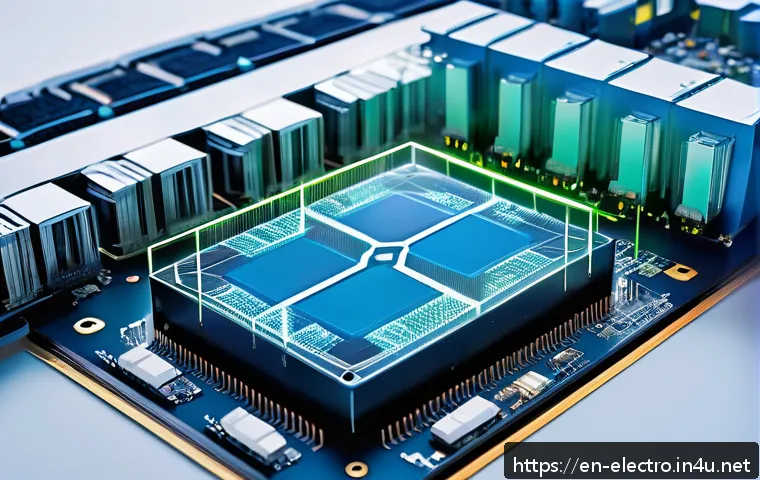
The transition from planar transistors to FinFETs has brought significant reductions in leakage and improved control over short-channel effects, thereby improving power efficiency.
However, new device architectures introduce fresh challenges in modeling and variability. From my observations, staying updated with device technology trends is critical to accurate power analysis and design optimization.
Role of Machine Learning in Power Estimation
Machine learning models are increasingly being used to predict power consumption based on design parameters and activity patterns. I’ve experimented with ML-based tools that accelerate power estimation by learning from prior simulations and silicon measurements.
While still maturing, this approach promises faster design iterations and more adaptive power management strategies.
Embracing Low-Power Design for AI and Edge Computing
AI workloads and edge computing demand highly efficient circuits that can operate under tight power constraints. Designing for these applications often means leveraging aggressive power gating, near-threshold computing, and specialized accelerators.
From my recent projects, integrating power analysis early in the AI hardware development cycle has been indispensable for meeting stringent energy budgets.
Summary of Key Power Analysis Parameters
| Parameter | Description | Typical Impact | Optimization Techniques |
|---|---|---|---|
| Dynamic Power | Power consumed during transistor switching activities | Major contributor in active mode | Clock gating, voltage scaling, activity factor reduction |
| Static Power | Leakage power when circuit is idle | Increases with smaller process nodes | Power gating, MTCMOS, transistor threshold control |
| Activity Factor | Ratio of switching events to total cycles | Directly influences dynamic power | Workload profiling, input vector optimization |
| Voltage | Supply voltage level for the circuit | Quadratically affects dynamic power | DVFS, near-threshold voltage operation |
| Clock Frequency | Rate of clock cycles per second | Linearly affects dynamic power | Adaptive frequency scaling, clock gating |
| Power Density | Power dissipation per unit area | Impacts thermal design and reliability | Floorplanning, heat sinks, thermal-aware design |
Common Pitfalls and How to Avoid Them
Overestimating Power Due to Conservative Assumptions
One trap I’ve fallen into is using worst-case switching activity or maximum voltage scenarios that lead to overly pessimistic power estimates. While safe, these can inflate design costs and mask real opportunities for optimization.
Using realistic input patterns and profiling actual workloads can help avoid this pitfall.
Ignoring Environmental and Process Variations
Power consumption isn’t static—it varies with temperature, process corners, and aging effects. Neglecting these factors can cause surprises in silicon validation.
I make it a point to include variation-aware analysis in my workflow, which helps ensure designs are robust under all operating conditions.
Underestimating the Impact of Interconnect and Peripheral Circuits
Often, designers focus on core logic power and overlook interconnects, memory blocks, and I/O circuits, which can consume a significant portion of total power.
In my experience, comprehensive power analysis that includes these blocks leads to more accurate budgeting and better overall efficiency.
Tools and Resources to Enhance Your Power Analysis Workflow
Popular Commercial Power Analysis Suites
There are several industry-standard tools like Synopsys PrimeTime PX, Cadence Voltus, and Mentor Graphics PowerPro that provide comprehensive power analysis capabilities.
I’ve used these extensively and appreciate their tight integration with design environments and their support for advanced power intent standards like UPF and CPF.
Open-Source and Academic Tools Worth Exploring
For those starting out or working on research projects, tools like McPAT and OpenROAD provide valuable insights into power modeling. Though less polished than commercial offerings, they offer flexibility and transparency that can deepen your understanding of power phenomena.
Best Practices for Integrating Power Analysis Early
From my hands-on experience, embedding power analysis early in the design cycle—starting from architecture exploration through RTL and gate-level stages—yields the best outcomes.
Early detection of power bottlenecks allows for timely interventions, saving costly redesigns and improving overall product competitiveness.
Closing Thoughts
Power consumption remains a critical factor in modern digital design, influencing everything from performance to battery life. By understanding the key parameters and applying proven techniques, engineers can create more efficient and reliable systems. Continuous learning and adapting to emerging technologies will ensure success in managing power challenges effectively.
Useful Information to Keep in Mind
1. Dynamic power is mainly driven by switching activities, so minimizing unnecessary toggling can yield significant savings.
2. Static power, often caused by leakage currents, becomes more prominent with advanced process nodes and requires dedicated mitigation strategies.
3. Voltage scaling offers substantial power reductions but must be balanced carefully against timing and performance constraints.
4. Accurate power estimation relies heavily on realistic workload profiling and silicon measurements to avoid overly conservative designs.
5. Integrating power analysis early in the design cycle helps identify bottlenecks sooner, reducing costly revisions later on.
Key Takeaways for Effective Power Management
Understanding the interplay between dynamic and static power is essential for optimizing overall energy consumption. Techniques such as clock gating, power gating, and multi-threshold CMOS provide practical ways to reduce power without sacrificing performance. Additionally, leveraging advanced simulation tools and real silicon data ensures accurate power modeling. Finally, balancing performance demands with power budgets requires thoughtful trade-offs and adaptive strategies tailored to specific application needs.
Frequently Asked Questions (FAQ) 📖
Q: uestions about Power Efficiency in Digital CircuitsQ1: Why is power analysis crucial in modern digital circuit design?
A: Power analysis has become a cornerstone of digital circuit design because it directly impacts device performance, battery life, and thermal management.
As devices shrink and functionality grows, inefficient power use can lead to overheating, reduced reliability, and shorter usage times. Accurately analyzing power consumption allows designers to identify hotspots and optimize circuits, ensuring that the device runs cooler, lasts longer on a charge, and performs at its best.
From my experience working on handheld gadgets, even small improvements in power efficiency can translate to hours of extra battery life, which users truly appreciate.
Q: What are some effective techniques for improving power efficiency in digital circuits?
A: There are several proven methods to boost power efficiency. Dynamic voltage and frequency scaling (DVFS) adjusts power based on workload, while clock gating shuts off inactive parts of the circuit to save energy.
Using low-power design libraries and optimizing logic paths to reduce switching activity also help. I’ve personally found that combining these approaches yields the best results—like in one project where implementing clock gating alongside voltage scaling cut power consumption by nearly 30% without sacrificing performance.
It’s about smart trade-offs and tailoring techniques to your specific application.
Q: How can mastering power analysis give engineers a competitive edge?
A: Engineers who understand power analysis stand out because they can deliver designs that not only meet performance goals but also align with growing market demands for energy-efficient products.
This expertise enables faster debugging, better design decisions, and innovation in green electronics, which is a huge selling point today. In my career, clients have consistently preferred engineers who can balance speed, functionality, and power use effectively—making power analysis skills a real differentiator that opens doors to exciting projects and leadership roles.