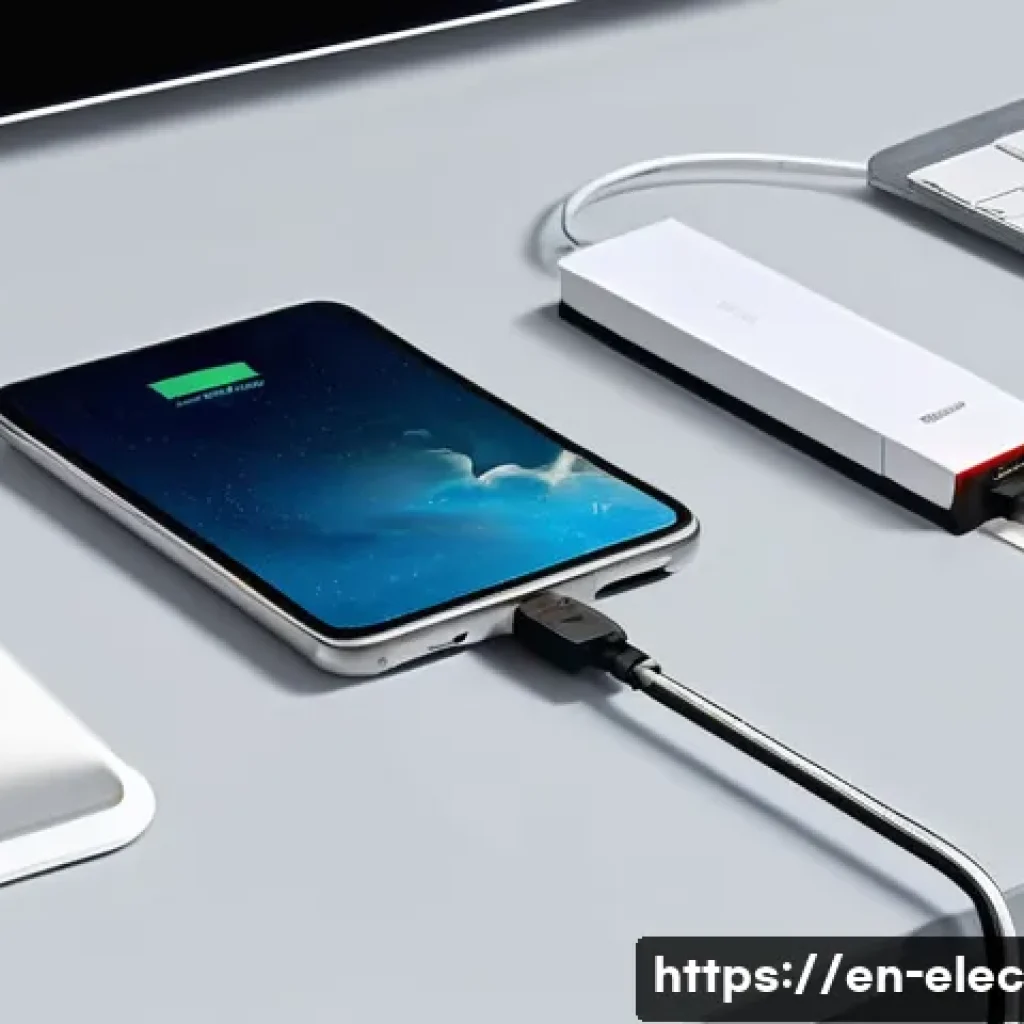
Have you ever stopped to think about the invisible force that powers virtually everything around us, from the smartphone in your hand to the electric vehicle humming down the street?
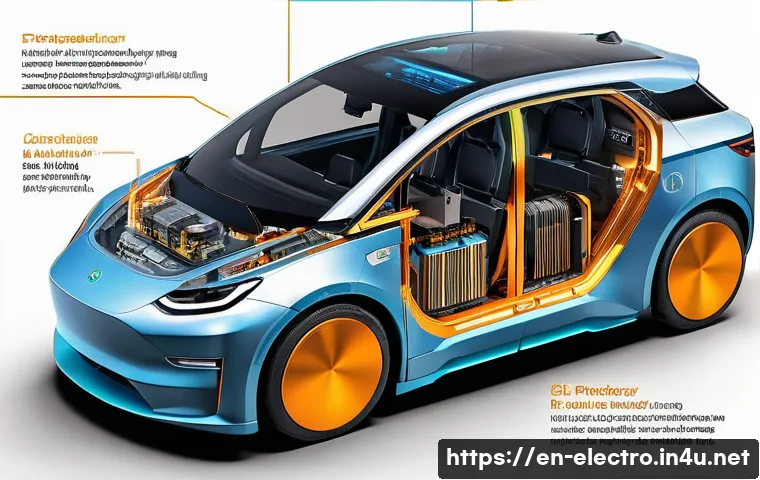
It’s all thanks to the incredible advancements in power conversion technology! I remember being absolutely fascinated by how a simple wall outlet could transform into the precise energy needed for all my gadgets.
This isn’t just about plugging things in; it’s a dynamic field experiencing a massive revolution, driven by game-changing materials like Silicon Carbide (SiC) and Gallium Nitride (GaN) that are making our world more efficient and sustainable.
From what I’ve seen, these innovations are not just making our devices smaller and faster; they’re truly at the heart of our shift towards renewable energy and a greener future.
It’s truly mind-blowing how this essential engineering is shaping our daily lives and opening doors to possibilities we’re only just beginning to imagine.
Let’s uncover the secrets behind this crucial technology and explore where it’s headed!
The Unseen Heroes: Why Power Conversion is Our Modern Lifeline
Have you ever given a second thought to how all your devices magically get the exact power they need? It’s something we often take for granted, isn’t it? From the moment you plug in your phone charger to the humming of an electric vehicle gliding by, power conversion is the unsung hero making it all happen. It’s like the meticulous translator for electricity, ensuring that the raw power from the grid is transformed into precisely what each gadget, appliance, or industrial machine requires. For decades, silicon was our trusty workhorse, a material that got us pretty far, but in today’s fast-paced, energy-hungry world, it’s starting to show its limits. We’re talking about a demand for power that is growing exponentially, driven by everything from smart home devices to massive data centers, and let’s not forget the explosive growth of electric vehicles. This isn’t just about making things work; it’s about making them work *better*, *faster*, and with *less waste*. I remember when my laptop charger felt like a mini brick, always getting super hot. Now, chargers are tiny, sleek, and barely warm, and that’s a direct testament to the silent revolution happening in power conversion. It’s truly a critical field, constantly innovating to meet the complex and ever-increasing energy demands of our electrified future.
Beyond the Basics: More Than Just Plugging In
We’re past the days where a simple AC-DC adapter was considered cutting-edge. Today’s power conversion isn’t just about changing voltage or current types; it’s about intelligent management, precision control, and minimizing energy loss at every single step. Think about it: every time power changes form – from the grid to your device, or from a solar panel to your home battery – there’s a potential for energy to be wasted as heat. Older technologies often lost a significant chunk of power, sometimes up to 50% in linear designs from the 1980s. That’s just mind-boggling when you think about the environmental and financial cost. Modern power converters, however, are pushing efficiencies into the high 90s, dramatically reducing that waste. It’s a fundamental shift that underpins our move towards a more sustainable and electrified society, and honestly, it’s exciting to see how much progress has been made.
The Growing Thirst for Efficiency
Our insatiable appetite for technology means an ever-growing demand for electricity. From expanding data centers to charging millions of electric vehicles, the need for efficient power conversion is more critical than ever. Every watt saved means less energy generated, fewer emissions, and ultimately, a healthier planet and lower electricity bills. I’ve seen firsthand how a seemingly small improvement in efficiency at the component level can translate into significant energy savings and performance boosts when scaled across an entire system, like a data center or an EV fleet. It’s not just about what a device *can* do, but how *efficiently* it *does* it, and that’s where the real innovation in power conversion shines.
Decoding the Magic: Silicon Carbide (SiC) and Its Superpowers
Stepping into the world of advanced semiconductors, Silicon Carbide, or SiC, has really carved out a name for itself as a true powerhouse. I remember first hearing about “wide bandgap” materials and thinking it sounded like something out of a sci-fi movie, but the reality is even cooler. SiC is a compound of silicon and carbon, and its unique atomic structure gives it incredible advantages over traditional silicon. What does this mean for us? Well, for starters, SiC devices can handle significantly higher voltages and temperatures, often up to 200°C or even more, where silicon would simply melt down or fail. This ability to withstand extreme conditions without compromising performance is a game-changer. I’ve often wondered about the sheer engineering brilliance that goes into making materials that can tolerate such intense stress, and SiC really is a testament to that. It’s like having a super-tough, super-reliable component that can perform under pressure, day in and day out.
Withstanding the Heat: Thermal Stability and Robustness
One of the most impressive aspects of SiC, in my opinion, is its exceptional thermal conductivity. It’s significantly better at dissipating heat than silicon, which is a huge deal in electronics. Think about how hot your phone can get when you’re pushing it, or how a charger feels warm. Excessive heat is the enemy of electronic components, limiting their lifespan and performance. With SiC, devices can run cooler even under heavy loads, which means less need for bulky cooling systems. This translates directly into smaller, lighter, and more reliable products. It’s a win-win: better performance and a longer life for your gadgets. When I swapped out some older components in a project I was working on for SiC alternatives, the difference in thermal performance was immediately noticeable – everything just felt cooler and more stable.
Powering Up: High Voltage and High Power Capabilities
SiC truly shines in high-power, high-voltage applications. We’re talking about devices that need to manage significant amounts of electrical energy, often in demanding environments. Its wider bandgap means it has a much higher breakdown voltage, allowing it to handle higher electric fields without breaking down. This is why SiC is becoming indispensable in electric vehicle inverters, industrial motor drives, and renewable energy systems like solar inverters. I’ve heard countless stories from engineers who praise SiC for enabling systems to be more efficient, reducing energy losses by a considerable margin – sometimes as much as 90% in high-power electric motors. This isn’t just incremental improvement; it’s a revolutionary leap in how we manage and utilize high power.
The New Kid on the Block: Gallium Nitride (GaN) and Its Game-Changing Speed
While SiC has been making waves, Gallium Nitride, or GaN, has emerged as another incredibly exciting wide bandgap material, bringing its own set of phenomenal advantages, particularly when it comes to speed. I first encountered GaN in the context of fast chargers for laptops and phones, and it immediately struck me how much smaller and lighter these chargers had become. It felt like magic, transforming a bulky accessory into something sleek and pocket-friendly. GaN’s magic lies in its exceptionally high electron mobility, which essentially means electrons can move through the material much faster than in silicon or even SiC. This enables GaN devices to switch at incredibly high frequencies – often in the megahertz range – which is a huge step up. Faster switching means less energy is lost during the conversion process, leading to incredibly efficient power supplies. It’s truly a game-changer for anything that needs to be compact, lightweight, and super-fast.
Speed Demons: Ultra-Fast Switching for Compact Designs
The rapid switching capabilities of GaN are what really set it apart for many applications. Imagine power flowing through a switch. Every time that switch turns on or off, there’s a tiny bit of energy lost. If it switches a million times a second, those tiny losses can add up. But with GaN, these losses are dramatically reduced. This ultra-fast switching allows designers to use much smaller passive components like inductors and capacitors, which are typically the bulkiest parts of a power supply. My experience has been that this leads to an amazing reduction in the overall size and weight of power converters, perfect for things like those super-slim phone chargers, or even more complex systems like those in electric vehicles or data centers. It’s a huge win for miniaturization and portability, making our devices not just more powerful, but also more convenient.
Efficiency at Its Core: Minimizing Energy Waste
Beyond just enabling smaller devices, GaN’s superior switching performance directly translates into higher energy efficiency. By reducing both switching and conduction losses, GaN power devices waste less energy as heat. This means more of the electricity drawn from the wall actually reaches your device, doing useful work. For instance, in a DC-DC converter, GaN can offer significantly lower losses and higher efficiency compared to SiC. For anyone looking to reduce their carbon footprint or simply save on electricity bills, GaN technology is a fantastic step forward. It’s one of those innovations that you might not see, but you definitely feel its impact in your wallet and on the environment.
SiC vs. GaN: Choosing the Right Champion for Your Power Needs
When it comes to the cutting edge of power electronics, both SiC and GaN are absolute superstars, but they’re definitely not interchangeable. It’s a bit like choosing between a heavy-duty truck and a sleek sports car – both are incredible vehicles, but they excel in different scenarios. From my perspective, understanding their unique strengths is key to knowing where each material truly shines. SiC has really staked its claim in high-power, high-voltage applications, especially those demanding extreme robustness and thermal performance. We’re talking about multi-kilowatt systems, often operating at voltages well above 1200V, like the inverters in electric vehicles, fast charging stations, industrial motor drives, and large-scale renewable energy systems. Its ability to handle massive amounts of power with minimal loss, even in very hot conditions, makes it the go-to choice for heavy-lifting tasks. GaN, on the other hand, is the undisputed champion of high-frequency and compact power delivery, especially in the 100V to 650V range. Its incredibly fast switching speeds enable significant size reductions, making it perfect for consumer electronics, data center power supplies, and some specialized automotive applications. It’s fascinating how these two materials, both superior to traditional silicon, complement each other by addressing different segments of the power electronics market.
High Voltage vs. High Frequency: Where Each Excels
The core difference often boils down to voltage and frequency capabilities. SiC devices can withstand much higher voltages, with some devices operating up to 6.5kV or even higher, making them perfect for grid-level applications or large industrial machinery. They also boast incredible thermal conductivity, ensuring efficient operation even when pushing a lot of power. GaN, while operating at typically lower voltage ranges (around 100-650V), truly dominates in applications requiring ultra-high switching frequencies, often well into the megahertz range. This speed is what allows for the dramatically smaller passive components and, consequently, the miniaturization of power supplies we’re seeing in gadgets. When I’m looking at a design, I’m always thinking: “Is this about sheer brute force and high voltage, or is it about elegant, high-speed power delivery in a tiny package?” That often tells me whether I’ll be leaning towards SiC or GaN.
Cost and Practical Considerations
Beyond technical performance, cost is always a factor, especially for a blogger like me who’s always looking for the “smart buy.” Currently, SiC devices are becoming more cost-effective and are more widely available than GaN, partly because they’ve been around longer. However, the manufacturing costs for GaN are steadily decreasing, and its unique advantages in certain applications often justify the investment at a system level, due to savings in cooling, passive components, and overall energy efficiency. For high-volume consumer electronics, GaN’s ability to shrink components can lead to significant system-level cost savings despite a higher per-component price. Meanwhile, silicon still has its place in cost-sensitive applications where extreme performance isn’t required. It’s a dynamic market, and the balance between performance and price is constantly shifting.
From Wall Plugs to Electric Dreams: Where Modern Power Conversion Shines
It’s honestly incredible to see how these advancements in power conversion, especially with SiC and GaN, are transforming so many aspects of our daily lives. This isn’t just theoretical; it’s happening right now, making everything from our smartphones to our cars more efficient and powerful. I remember thinking about how clunky and hot early power bricks were, and now we have tiny, cool-running chargers that can juice up a phone in minutes. That’s GaN at work! Then there’s the electric vehicle revolution. SiC is absolutely central to extending EV ranges and enabling lightning-fast charging. It’s not just about convenience; these technologies are at the heart of our journey towards a greener, more sustainable future, making our energy infrastructure more robust and our devices more capable. It truly feels like we’re living through a golden age of electrical engineering.
Electric Vehicles: Driving the Future Forward
The automotive industry is perhaps where SiC is having its most visible and profound impact. Electric vehicles rely heavily on efficient power conversion, primarily in their inverters, which convert the battery’s DC power into AC to drive the electric motors. By integrating SiC into these inverters, manufacturers are achieving remarkable efficiency gains – sometimes 5-10% better than silicon-based designs. This directly translates to longer driving ranges and less strain on the battery, which is a huge deal for consumers like you and me. I’ve heard stories about how this technology is also enabling ultra-fast charging stations, slashing charging times dramatically and making EVs even more practical for long road trips. It’s no exaggeration to say that SiC is a cornerstone of the EV revolution.
Renewable Energy: Harvesting Power More Efficiently
Another area where SiC and GaN are absolutely crucial is in renewable energy systems. Think about solar panels: they produce DC power, which then needs to be converted into AC power for the grid or your home. This is where inverters come in, and SiC and GaN devices are making these inverters incredibly efficient. For instance, SiC-based solar inverters can reach efficiencies of up to 99%, dramatically reducing energy losses. The same goes for wind turbines and energy storage systems; these wide bandgap semiconductors ensure that more of the generated energy actually makes it to where it needs to go, with minimal waste. It’s an essential part of making renewable energy truly viable and competitive on a global scale.
Beyond the Buzzwords: My Personal Dive into This Electrifying World
Sometimes, when you’re looking at all the technical specs and industry jargon, it’s easy to forget that behind every advancement is real people, real challenges, and real breakthroughs. For me, getting into the nitty-gritty of power conversion wasn’t just about understanding the physics; it was about seeing the tangible impact on my own life and the world around me. I remember tinkering with an old, inefficient power supply for a custom PC build years ago. It ran hot, was noisy, and honestly, felt a bit wasteful. Fast forward to today, and I’m marveling at the tiny, silent power bricks that charge my devices in a flash, or the smooth, powerful acceleration of a new electric car. It’s a stark reminder of how far we’ve come and how much continuous innovation is happening. This isn’t a stagnant field; it’s alive with engineers pushing boundaries, always seeking that next fractional percentage of efficiency or that next leap in power density.
The Thrill of Efficiency Gains
There’s a genuine satisfaction that comes from seeing something become significantly more efficient. When I first learned about how much energy was lost in older power conversion methods, it really struck a chord. Now, with SiC and GaN, we’re talking about reducing losses by huge margins, sometimes even 70% compared to older silicon devices. That’s not just a number on a spec sheet; it’s less heat, smaller components, and ultimately, less strain on our planet’s resources. It feels good to know that the technology underpinning our modern lives is actively working towards sustainability, making every watt count. It’s a journey of continuous improvement, and I’m always on the lookout for the next big thing that will make our electronics even more energy-smart.
Real-World Impact You Can Feel
The impact of these technologies isn’t just theoretical; it’s something you can experience. Think about the sleek design of modern electronics, how much lighter they are, and how much longer battery life we’re getting. A significant portion of that is thanks to advanced power conversion. For example, the shift to 48V architectures in data centers, enabled by these highly efficient power solutions, drastically reduces power distribution losses – by up to 16 times! That’s a massive saving for an industry that consumes a huge amount of electricity. It means faster data, more reliable services, and a smaller environmental footprint. It truly brings to life the idea that small changes at the fundamental level can lead to monumental improvements across entire industries.
Powering Tomorrow: What the Future Holds for Efficient Energy
Looking ahead, the future of power conversion technology, especially with SiC and GaN leading the charge, is incredibly bright and full of promise. We’re not just refining existing tech; we’re pushing into entirely new frontiers. The drive for greater energy efficiency isn’t slowing down, and these wide bandgap semiconductors are key enablers for that continued progress. I envision a world where our energy systems are seamlessly integrated, from decentralized renewable sources to smart grids and energy storage, all operating with minimal waste thanks to ultra-efficient converters. It’s an exciting time to be alive, witnessing the very building blocks of our electrified future being laid down, piece by meticulously engineered piece. This isn’t just about better gadgets; it’s about reshaping our entire energy landscape for a more sustainable tomorrow.
The Next Generation of Semiconductors and Beyond
While SiC and GaN are currently the stars of the show, research isn’t stopping there. Scientists and engineers are already exploring “ultra-wide bandgap” materials like diamond and gallium oxide (Ga2O3), which promise even higher efficiencies and performance capabilities. Imagine devices that can handle even more extreme temperatures and voltages, pushing the boundaries of what we thought possible. These new materials are still in earlier stages of development, facing their own manufacturing challenges, but the potential is truly mind-blowing. I’m always keeping an eye on these developments, because they represent the cutting edge of what’s next in power electronics, potentially making today’s innovations seem quaint in just a few years.
Smart Integration: AI and Digital Control
The future isn’t just about materials; it’s also about intelligence. We’re seeing a huge trend towards integrating artificial intelligence (AI) and machine learning into power electronics. This isn’t some futuristic fantasy; it’s already happening. Digital control techniques allow power converters to adapt in real-time to changing conditions, optimizing performance and efficiency on the fly. AI can even predict potential failures, enabling predictive maintenance and vastly improving the reliability of power systems. For me, this blend of advanced materials and intelligent control is where the magic truly happens, creating systems that are not only powerful and efficient but also smart and resilient. It’s a testament to human ingenuity constantly striving for better.
| Characteristic | Traditional Silicon (Si) | Silicon Carbide (SiC) | Gallium Nitride (GaN) |
|---|---|---|---|
| Bandgap (eV) | 1.1 | 3.2 – 3.3 | 3.4 |
| Max Operating Temp. | ~150°C | ~200°C+ | ~200°C+ |
| Thermal Conductivity (W/m·K) | 150 | 490 | 130 |
| Typical Voltage Range | Up to 600V | 600V to 6.5kV+ | 100V to 650V |
| Switching Frequency | Low (kHz range) | Moderate (10-100kHz) | High (MHz range) |
| Best Applications | General electronics, low power | High power, high voltage, high temp (EVs, industrial, grid) | High frequency, compact, high efficiency (chargers, data centers, RF) |
| Relative Cost | Low | Medium-High | High (decreasing) |
Closing Thoughts
Well, we’ve journeyed quite a bit through the fascinating world of power conversion and the revolutionary impact of SiC and GaN. It’s truly amazing how these “invisible heroes” are shaping our tech-driven lives, making everything from our tiny phone chargers to our powerful electric vehicles incredibly efficient and sustainable. I hope this deep dive has shed some light on why these wide bandgap materials are such a big deal, and perhaps, like me, you now appreciate the silent, intelligent work happening behind every powered device. The future is undoubtedly electric, and with innovations like these, it’s looking brighter and more efficient than ever before. It’s a testament to human ingenuity constantly striving for better.
Useful Information to Know
1. Unplugging Saves: Those tiny power bricks? Even when your device isn’t charging, they can still draw “phantom” power, wasting energy. Make it a habit to unplug chargers when not in use. This isn’t just good for your wallet, it’s a simple step towards energy conservation.
2. Smart Strips are Your Friend: For a cluster of electronics, a power strip with an on/off switch is a game-changer. You can turn off multiple devices at once, completely cutting off standby power without needing to unplug each item individually. Some even have remote switches for extra convenience.
3. Choose Energy Star: When buying new electronics, always look for the ENERGY STAR label. These products are certified to use less power, which means lower electricity bills and a smaller environmental footprint. It’s a simple way to make a big difference over time.
4. Laptops Over Desktops for Efficiency: If you’re in the market for a new computer and energy efficiency is a priority, consider a laptop. They generally consume significantly less power than desktop PCs, sometimes up to 90% less, making them a greener choice for everyday computing.
5. Smart Home Energy Management: The future of energy saving is increasingly integrated into our homes. Smart home energy management systems (HEMS) can monitor, control, and optimize your energy usage in real-time, even integrating with renewable sources like solar panels and battery storage for maximum efficiency and savings. These systems can even participate in demand response programs, reducing consumption during peak times for incentives.
Key Takeaways
The world of power conversion is undergoing a silent revolution, driven by advanced wide bandgap semiconductors like Silicon Carbide (SiC) and Gallium Nitride (GaN). These materials are dramatically enhancing the efficiency, speed, and compactness of electronic devices across almost every sector, from electric vehicles and renewable energy systems to consumer electronics and data centers. While SiC excels in high-power, high-voltage applications requiring robustness and superior thermal management, GaN leads the charge in high-frequency, compact power delivery. This ongoing innovation is not just about making devices perform better; it’s about building a more sustainable and energy-efficient future for us all.
Frequently Asked Questions (FAQ) 📖
Q: What exactly is power conversion technology, and why should I even care about it?
A: You know, it’s funny how we often take for granted the intricate dance of electricity happening behind the scenes. Power conversion technology is essentially the unsung hero that takes electrical energy and transforms it into the precise form our devices need.
Think about it: the wall outlet gives us AC (alternating current), but your phone, laptop, and even your electric car battery run on DC (direct current).
Power converters are the clever translators that make this switch happen, or even change voltage levels or frequencies. Why care? Well, I remember when my old phone charger used to get blazing hot, wasting so much energy as heat.
Modern power conversion makes things incredibly efficient, meaning less wasted electricity, cooler devices, and ultimately, lower energy bills for us.
It’s also absolutely critical for our sustainable future. Without efficient power conversion, integrating renewable energy sources like solar panels and wind turbines into our homes and grids would be nearly impossible.
They convert the raw energy from these sources into usable electricity, helping us build a greener world. So, every time your device charges faster, or you see an EV silently gliding by, you’re witnessing the magic of power conversion at work!
Q: What are SiC (Silicon Carbide) and GaN (Gallium Nitride), and why are they considered game-changers in this field?
A: Oh, these two are truly revolutionary, and I’ve been fascinated watching their impact grow! SiC and GaN are what we call “wide-bandgap” semiconductors, and they’re like the superheroes replacing the older, trusty silicon in many power electronics applications.
I always explain it like this: imagine silicon as a good, reliable workhorse. It’s been fantastic for decades. But SiC and GaN?
They’re the racehorses. From my experience, the biggest deal with SiC and GaN is their ability to handle much higher voltages and temperatures, switch incredibly fast, and be much more efficient.
This means they lose significantly less energy as heat during conversion, making devices smaller, lighter, and more powerful. For instance, those tiny, super-fast chargers for our smartphones?
Many of them use GaN to achieve that compact size and speed. And for something as big as an electric vehicle’s inverter or a massive solar power system, SiC really shines because it can handle those extreme power levels and temperatures, significantly extending the EV range and improving overall system reliability.
It’s genuinely exciting to see how these materials are pushing the boundaries of what’s possible, allowing us to build a more efficient and powerful electronic world.
Q: How are these advancements in power conversion, especially with SiC and GaN, really impacting my daily life and shaping our future?
A: This is where it gets really tangible and, frankly, quite exciting! When I first started noticing the difference, it was in how much lighter my laptop adapter became, or how much faster my phone charged without getting burning hot.
That’s a direct impact of GaN, enabling smaller, more efficient consumer electronics. It’s not just about gadgets, though. Think about electric vehicles.
SiC, in particular, is a huge factor in why EVs are becoming more efficient, offering longer ranges, and charging quicker. It’s making the transition to electric transportation smoother and more practical for everyone.
Looking ahead, these technologies are absolutely foundational for a sustainable future. They’re critical for everything from integrating vast solar and wind farms into our energy grid to creating smart grids that manage electricity flow much more intelligently.
This means cleaner energy reaching our homes with less waste. I honestly believe that these power conversion innovations are quietly powering the green revolution.
They’re making our energy systems more resilient, reducing our reliance on fossil fuels, and ultimately, ensuring that the invisible force of electricity works smarter, not harder, for all of us.