Hey there, fellow tech enthusiasts and energy-conscious minds! Have you ever stopped to think about the incredible magic that keeps our modern world buzzing?
From the phone in your hand to the electric car silently cruising down the street, and even the solar panels soaking up rays on rooftops, there’s an unsung hero working tirelessly behind the scenes: power conversion devices.
Honestly, before I really dug into it, I had no idea how profoundly these little marvels impact our daily lives. It feels like we’re constantly on the go, charging our gadgets, relying on seamless smart home tech, and seeing electric vehicles become a common sight.
But none of that convenience would be possible without the genius of power converters, efficiently transforming electricity to exactly what each device needs.
I mean, who would have thought that the shift to things like Silicon Carbide (SiC) and Gallium Nitride (GaN) semiconductors could make our devices so much faster, cooler, and more energy-efficient?
It’s truly mind-boggling when you realize the sheer potential these advancements hold, especially as we push towards integrating more renewable energy and smarter grids into our everyday infrastructure.
The future looks incredibly exciting, with innovations like ultra-fast EV charging that dramatically cuts down waiting times, and even the promise of our cars giving power *back* to the grid through vehicle-to-grid (V2G) technology.
It’s a complete game-changer, and frankly, I’m thrilled to explore how these continuous breakthroughs are not just solving today’s energy challenges but are actively shaping a more sustainable and electrified tomorrow for all of us.
If you’re as fascinated as I am by the sheer ingenuity powering our world, you’re in for a treat. Let’s dive in deeper below!
The Unseen Architects: Why Power Conversion is at the Heart of Everything
From Your Pocket to the Grid: Power’s Constant Transformation
It’s wild, isn’t it? We plug in our phones, hop into our EVs, and our smart homes just… work. But have you ever stopped to really ponder *how* all that happens so seamlessly?
I certainly didn’t, not in depth, until I started looking closer. The truth is, behind every single electronic device we use, from the tiniest smartwatch to the largest wind turbine, there’s a silent hero orchestrating the flow of electricity: a power conversion device.
It’s not always about just plugging into a wall; it’s about taking the raw power from the grid or a battery and meticulously shaping it into the exact voltage, current, and frequency that a specific component needs.
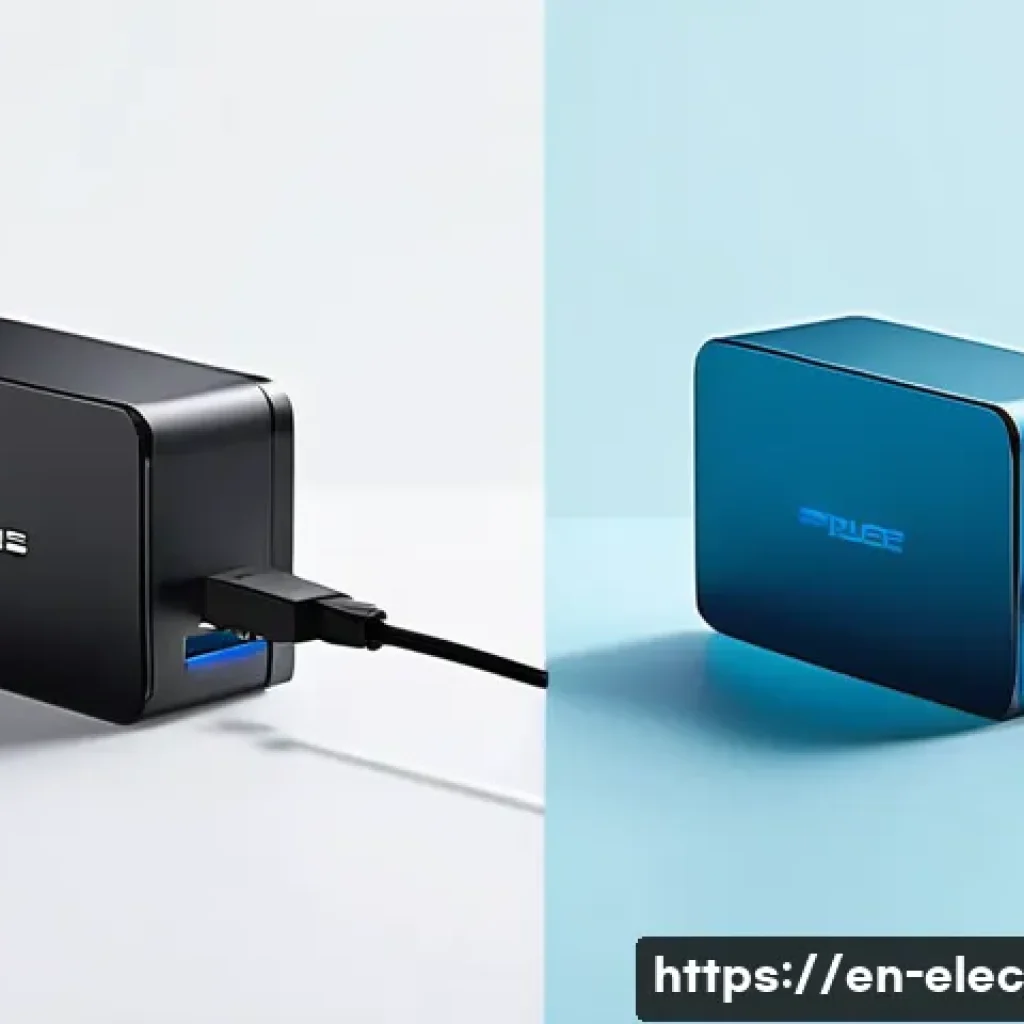
Think about it – your phone charger isn’t just a cable; it’s a miniature converter, transforming AC power from your outlet into the DC power your phone battery craves.
Without these incredibly efficient, often overlooked components, our entire modern electrified world would simply grind to a halt. I’ve personally experienced the frustration of using a cheap, inefficient charger that overheats and barely charges my device, making me appreciate the engineering brilliance in the good ones even more.
It’s a constant dance of transformation, ensuring every byte of data, every spin of a motor, and every glow of a screen gets precisely what it needs, precisely when it needs it.
The Silent Efficiency Boosters: How They Save Us Energy and Money
Beyond just making things work, these power conversion devices are the unsung champions of efficiency. I used to think of efficiency in terms of bigger picture stuff like solar panels or wind farms, but the real magic often happens at the micro-level.
A highly efficient power converter means less energy is wasted as heat, which translates directly into lower electricity bills for us and a smaller carbon footprint for the planet.
For instance, the power supply in your computer or TV might not seem like a big deal, but if it’s converting power inefficiently, it’s literally throwing energy away as heat, which you then have to pay for.
I remember upgrading an old desktop computer and being amazed at how much cooler the new one ran, even under heavy load – a huge part of that was the vastly improved efficiency of its internal power supply.
It’s not just about the big energy producers; it’s about optimizing every single point of energy consumption. And as we pack more and more tech into our lives, the cumulative effect of these small, efficient power conversions becomes absolutely massive, driving us towards a more sustainable future without us even noticing it half the time.
Next-Gen Powerhouses: The Silicon Carbide and Gallium Nitride Revolution
Beyond Silicon: Why SiC and GaN Are Game-Changers
Okay, let’s get a little geeky, but in a totally approachable way, because this stuff is genuinely exciting! For decades, silicon has been the undisputed king of semiconductors, forming the backbone of virtually all electronics.
But in the realm of power conversion, we’re seeing a seismic shift, and honestly, it’s one of the most significant breakthroughs I’ve witnessed in years.
Enter Silicon Carbide (SiC) and Gallium Nitride (GaN). These “wide bandgap” materials are fundamentally different from traditional silicon. What does that mean for us?
In layman’s terms, they can handle much higher voltages, operate at much higher temperatures, and switch much, *much* faster than silicon. Imagine a highway where silicon is a busy but conventional road, and SiC/GaN are like express lanes that are wider, faster, and can handle a massive volume of traffic with ease.
When I first heard about these, I thought, “How much of a difference can it really make?” But seeing products incorporating them, like smaller, cooler laptop chargers or faster EV charging, has completely changed my perspective.
It’s like going from a bulky old CRT monitor to a sleek, thin OLED display – the underlying technology makes a profound difference in every aspect of performance.
Smaller, Cooler, Faster: The Real-World Impact on Our Devices
The practical implications of SiC and GaN are truly remarkable, and they’re already subtly improving our daily lives. Because these materials are so much more efficient, power conversion devices built with them can be significantly smaller, generate less heat, and operate at higher frequencies.
Think about those tiny, powerful USB-C chargers you can now get that can charge your laptop, phone, and tablet all at once. Before SiC and GaN, a charger with that kind of output would have been a chunky, warm brick.
Now, they fit in your palm! I remember carrying around those huge laptop power adapters that felt like they weighed more than the laptop itself. The sheer convenience of these new, compact chargers is a testament to this technological leap.
Furthermore, in electric vehicles, the faster switching speeds mean more efficient power delivery from the battery to the motor, extending range and enabling ultra-fast charging.
Less heat means components last longer and don’t require bulky cooling systems, freeing up space and further boosting efficiency. It’s a win-win-win for consumers, manufacturers, and the environment.
Supercharging Our Ride: EV Charging’s Incredible Leap Forward
From Hours to Minutes: The Race for Ultra-Fast Charging
If you’re anything like me, the idea of owning an electric vehicle is incredibly appealing, but range anxiety and charging times have always been a slight hang-up.
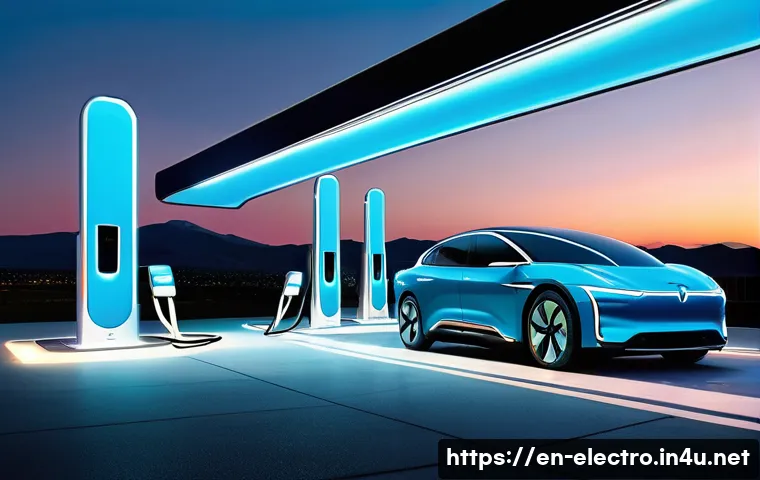
Well, get ready to have your mind blown, because power conversion technology is absolutely obliterating those concerns. The shift to SiC-based converters is a colossal reason why we’re seeing ultra-fast EV charging stations that can add hundreds of miles of range in just minutes.
I recall the early days of EVs when a full charge could take all night, and even fast chargers felt sluggish. Now, it’s becoming increasingly common to pull into a station, grab a coffee, and come back to a substantially charged battery.
This isn’t just about bigger batteries; it’s about the incredible efficiency and speed with which power can be transferred into those batteries, all thanks to advanced power conversion.
The ability of SiC to handle higher power levels with minimal losses means less energy wasted as heat and more power directed straight into your vehicle’s battery pack, making the charging experience much closer to filling up a gas tank.
This leap dramatically improves the convenience and practicality of EVs, making them a viable option for even the busiest lifestyles.
Beyond Charging: The Promise of Vehicle-to-Grid (V2G) Technology
Here’s where it gets really exciting and where the concept of power conversion truly shows its versatility: Vehicle-to-Grid (V2G) technology. Imagine your electric car not just taking power from the grid but also giving it back when needed.
It sounds like science fiction, right? But it’s rapidly becoming a reality, and power conversion devices are at its very core. A V2G-enabled EV effectively acts as a giant battery on wheels that can store excess renewable energy (like from solar panels during the day) and then feed it back into the grid during peak demand or when renewable sources aren’t producing.
I’ve been following this closely, and the idea of my car not just getting me around but also contributing to grid stability and potentially even earning me some passive income is truly revolutionary.
Of course, this requires sophisticated bi-directional power converters that can seamlessly switch between charging the vehicle and discharging its energy back into the home or grid, all while maintaining precise control and safety.
This isn’t just about faster charging; it’s about fundamentally rethinking our relationship with energy and empowering consumers to become active participants in a smarter, more resilient energy ecosystem.
Smart Grids and Green Power: Converters as the Connective Tissue
Integrating Renewables: The Essential Role of Converters
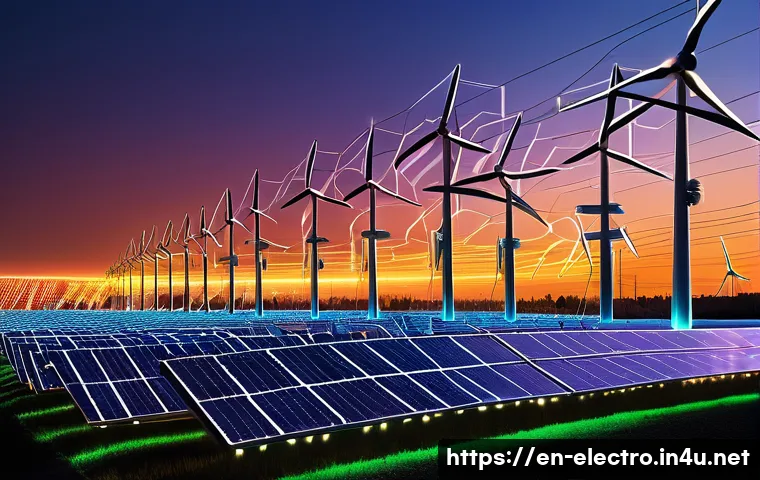
When we talk about shifting to a future powered by renewable energy, it sounds great on paper, but the practicalities can be incredibly complex. Solar panels produce DC power, wind turbines generate varying AC power, and the grid typically runs on a very stable AC frequency.
How do we bridge this gap and ensure all these disparate power sources play nicely together? You guessed it – power conversion devices are the unsung heroes making it all possible.
They are the essential connective tissue that allows us to seamlessly integrate intermittent renewable energy sources into our existing grid infrastructure.
I’ve seen some incredible advancements in inverter technology for solar installations, for example, that not only convert DC to AC but also optimize power output and communicate with the grid.
It’s a delicate dance of balancing supply and demand, and without highly efficient, robust power converters, our dreams of a fully green grid would remain just that – dreams.
They essentially act as translators, ensuring that the diverse “languages” of different energy sources can all be understood and utilized by the unified language of the power grid.
Building a Resilient Future: The Smart Grid and Its Converters
The concept of a “smart grid” isn’t just a buzzword; it’s a vision for a more efficient, reliable, and responsive electricity network. And guess what’s critical to making it smart?
You guessed it again: advanced power conversion technology. In a smart grid, power isn’t just flowing in one direction; it’s constantly being monitored, optimized, and redirected based on real-time demand and supply.
This requires sophisticated power electronics that can convert, invert, and manage power flow with incredible precision and speed. Imagine a scenario where local microgrids, powered by a mix of solar, wind, and battery storage, can operate independently or connect to the main grid as needed.
Each of these connections relies heavily on intelligent power converters to ensure stability, quality, and efficiency. I truly believe that as we push towards a more decentralized and resilient energy system, these clever converters will become even more indispensable, enabling everything from advanced energy storage solutions to dynamic load management.
It’s not just about converting power; it’s about intelligently managing the entire flow of energy for a truly future-proof infrastructure.
Beyond the Basics: Unseen Innovations Driving Efficiency
Digital Control and AI: The Brains Behind the Power
It’s easy to think of power converters as purely hardware-driven, a collection of wires and chips. But increasingly, the real magic happens in the software and control systems that govern them.
We’re moving into an era where digital control and even artificial intelligence are being integrated into power conversion devices, leading to unprecedented levels of efficiency and responsiveness.
I’ve been fascinated by how these intelligent systems can predict load changes, optimize switching frequencies in real-time, and even self-diagnose potential issues.
It’s like giving your power supply a brain! This means converters can adapt dynamically to varying conditions, ensuring peak performance and minimal energy waste, even in highly fluctuating environments.
This level of intelligence wasn’t really feasible with older analog control methods. The ability for these devices to “think” and adjust on the fly not only pushes efficiency boundaries but also enhances reliability and extends the lifespan of the components they power.
It truly adds a layer of sophistication that transforms them from simple converters to intelligent energy managers.
Miniaturization and Integration: More Power in Smaller Packages
One of the most noticeable trends, and one I absolutely love from a user perspective, is the relentless drive towards miniaturization and integration in power conversion.
We want more power, in smaller, lighter packages, and this has been a consistent demand across all electronics. Thanks to advances in materials like SiC and GaN, combined with clever design and manufacturing techniques, we’re seeing power converters shrink dramatically while simultaneously increasing their power density.
This isn’t just about making your phone charger smaller; it impacts everything from aerospace applications, where every gram saved is crucial, to data centers, where space and cooling are premium concerns.
I remember when external power bricks for anything substantial were the norm. Now, it feels like everything is integrating its power supply internally, or at least making it so small you barely notice it.
This trend not only makes our devices more portable and aesthetically pleasing but also simplifies system design and reduces overall manufacturing costs, ultimately benefiting us, the consumers, with sleeker, more powerful, and more convenient gadgets.
Your Gadgets, Greener: How Converters Shrink Your Carbon Footprint
Every Watt Counts: The Cumulative Impact of Efficient Devices
We often hear about grand schemes to combat climate change, but sometimes it’s the sum of countless small improvements that makes the biggest difference.
The enhanced efficiency of modern power conversion devices in our everyday gadgets is a perfect example of this. Think about all the devices in your home that are constantly drawing power, even when not actively in use – your TV, computer, gaming console, chargers, smart speakers, and so on.
If each of these devices, thanks to its internal power converter, is just a few percentage points more efficient, the cumulative energy savings across millions of households globally become staggering.
I’ve always been mindful of “vampire drain,” and it’s genuinely reassuring to know that the technology itself is becoming smarter about minimizing this wasted energy.
It’s not just about turning things off; it’s about the devices themselves being inherently designed to be less wasteful from the get-go. This widespread, incremental efficiency gain is a quiet but powerful force in reducing our collective carbon footprint, making “going green” a passive benefit of using modern electronics.
Extending Lifespan: A Hidden Benefit for the Planet
Here’s a less obvious but equally significant way that efficient power conversion contributes to sustainability: by extending the lifespan of our electronics.
When a power supply operates inefficiently, it generates excess heat. This heat is a major enemy of electronic components, accelerating their degradation and leading to premature failures.
By minimizing heat generation through highly efficient converters, we’re not only saving energy but also helping our devices last longer. I know for myself, there’s nothing more frustrating than a gadget conking out before its time.
When my devices last longer, I’m not replacing them as frequently, which means less electronic waste ending up in landfills and fewer resources consumed in manufacturing new ones.
It’s a powerful, often overlooked, aspect of the sustainability equation. This longevity is a direct result of the meticulous engineering within these power conversion systems, ensuring stable, cool, and precise power delivery, thereby nurturing the health of our beloved gadgets for years to come.
Future Forward: What’s Next in Power Conversion
Wireless Power: Untethering Our World
If there’s one area of power conversion that still feels like pure magic, it’s wireless power. While we have basic wireless charging pads today, the future promises something far more transformative.
Imagine entire rooms or even buildings where devices are continuously charged wirelessly, without ever needing to plug in. This isn’t just about convenience; it’s about reimagining how we interact with power entirely.
From wirelessly powered sensors embedded in infrastructure to medical implants that never need battery replacement, the potential is boundless. The underlying technology relies on highly sophisticated resonant inductive or radiative power transfer, which essentially means converting electrical energy into electromagnetic waves that can then be converted back into electricity at the receiver.
I’m personally super excited about the advancements that could allow for “charge-as-you-go” highways for EVs, completely eliminating range anxiety and the need for charging stations.
It’s a complex challenge, but the breakthroughs in high-frequency power conversion are steadily bringing this futuristic vision into reality, making our world truly untethered.
Energy Harvesting: Power from the Environment
Another frontier that truly excites me is energy harvesting. This is where power conversion devices take on an even more fascinating role: capturing ambient energy from the environment – think light, heat, vibrations, or even radio waves – and converting it into usable electricity.
Imagine tiny sensors powered indefinitely by the subtle vibrations of a bridge, or wearables charged by your body heat, or even smart clothing that gathers energy from sunlight.
These aren’t fantasy concepts; they’re areas of intense research and development in power electronics. The challenge lies in efficiently converting these very low-level, often intermittent energy sources into a stable, stored form of electrical power.
I’ve followed stories of self-powered environmental sensors in remote areas, and it’s a testament to how far we’ve come. This technology has the potential to create truly maintenance-free devices, reduce battery waste, and extend the reach of connected technology into places that are currently inaccessible or too costly to power.
It’s about making every whisper of energy count, and it’s a brilliant testament to human ingenuity.
| Feature | Traditional Silicon (Si) | Silicon Carbide (SiC) | Gallium Nitride (GaN) |
|---|---|---|---|
| Switching Frequency | Lower | Much Higher | Extremely High |
| Power Density | Lower | Higher | Highest |
| Thermal Performance | Moderate (requires more cooling) | Excellent (less cooling needed) | Very Good |
| Breakdown Voltage | Lower | Higher | High |
| Applications | General electronics, low-power devices | EV charging, industrial power supplies, solar inverters | High-frequency chargers, RF applications, LiDAR |
| Cost (relative) | Lowest | Higher than Si | Higher than SiC (currently) |
| Efficiency | Good | Excellent | Outstanding |
Wrapping Up
Phew! What an incredible journey we’ve taken through the often-unseen world of power conversion. It’s truly amazing, isn’t it, how these silent architects underpin almost every aspect of our electrified existence? From the tiny charging brick for your phone to the massive infrastructure powering our smart grids and future EVs, the dedication to converting energy precisely and efficiently is a testament to human ingenuity. I’ve personally felt the difference that well-engineered power electronics make, whether it’s in a device that runs cooler, a car that charges faster, or simply the peace of mind knowing my gadgets are working optimally. This isn’t just about making things function; it’s about pushing the boundaries of what’s possible, driving us towards a more sustainable, connected, and frankly, a more magical future. So, the next time you plug something in or see an EV whiz by, take a moment to appreciate the unsung heroes doing the heavy lifting behind the scenes.
Useful Information to Keep in Mind
1. Power conversion is everywhere: It’s the essential process that changes electrical energy into the exact form (voltage, current, frequency) needed by any electronic device, from your smartphone to industrial machinery. Without it, none of our modern tech would function as intended.
2. Efficiency matters for your wallet and the planet: Highly efficient power conversion means less energy is wasted as heat. This directly translates into lower electricity bills for consumers, reduced energy consumption globally, and a smaller carbon footprint, contributing significantly to environmental sustainability.
3. SiC and GaN are game-changers: Silicon Carbide (SiC) and Gallium Nitride (GaN) are advanced semiconductor materials that are revolutionizing power conversion. They enable devices to be significantly smaller, lighter, cooler, and operate at much higher frequencies and voltages than traditional silicon, paving the way for next-gen electronics.
4. EV charging is getting incredibly fast: The adoption of SiC technology is a key factor behind the rapid advancements in Electric Vehicle (EV) charging. It allows for ultra-fast charging stations that can add hundreds of miles of range in minutes, effectively addressing range anxiety and making EVs more practical for everyday use.
5. The future is untethered and intelligent: Beyond faster charging, power conversion is at the heart of exciting future technologies like wireless power for charging devices across rooms, energy harvesting to power electronics from ambient sources, and Vehicle-to-Grid (V2G) systems that let your EV contribute to grid stability.
Key Takeaways
It’s clear, isn’t it? Power conversion, while often operating in the background, is the foundational technology propelling our modern world forward at an astonishing pace. The continuous innovations, especially with materials like SiC and GaN, are not only making our current devices more efficient and powerful but are also unlocking entirely new possibilities in areas like electric vehicles, smart grids, and even wireless energy. What I’ve truly come to understand is that the meticulous design and engineering behind these power transformations directly impact our daily convenience, our environmental responsibility, and our collective journey towards a truly smart and sustainable future. Keep an eye on this space; the best is undoubtedly yet to come!
Frequently Asked Questions (FAQ) 📖
Q: What exactly are power conversion devices, and why are they so crucial in our daily lives?
A: Oh, this is such a fundamental question, and honestly, it’s something most of us just take for granted! Think of power conversion devices as the unsung heroes of our electrical world.
In the simplest terms, a power converter is a smart little gadget that takes electrical energy in one form and transforms it into another so that our devices can actually use it safely and efficiently.
For example, the electricity from your wall socket is usually Alternating Current (AC) at a certain voltage, but your laptop or smartphone battery needs Direct Current (DC) at a much lower voltage to charge without getting fried.
That little brick on your charger? That’s a power converter doing its magic! From my personal experience, I’ve realized just how pervasive these devices are.
They’re everywhere, from the giant inverters in solar panel systems that turn DC solar energy into AC for your home, to the small converters inside your electric vehicle managing its battery, and even the industrial systems that control factory machinery.
Without them, our modern life, with all its gadgets and green energy ambitions, would grind to a halt. They ensure compatibility, prevent damage, and crucially, make sure we don’t waste precious energy.
It’s truly mind-boggling how much we rely on these quiet transformers every single day!
Q: How are new materials like Silicon Carbide (SiC) and Gallium Nitride (GaN) changing the game for power converters, and what benefits do they offer?
A: This is where things get seriously exciting for us tech geeks! I’ve been following the advancements in materials science closely, and let me tell you, Silicon Carbide (SiC) and Gallium Nitride (GaN) are absolute game-changers in power electronics, leaving traditional silicon in the dust for many applications.
They’re what we call “wide-bandgap” semiconductors, and that essentially means they can handle much higher voltages, temperatures, and switch electrical currents way faster than silicon ever could.
What does this mean for us? Well, from what I’ve seen and read, the benefits are phenomenal:
First, Incredible Efficiency: SiC and GaN devices lose significantly less energy as heat during power conversion.
This is huge! For instance, SiC inverters in electric vehicles can achieve 6% lower energy losses, directly translating to more miles per charge for your EV.
I personally love the idea of my car being even more efficient. Second, Smaller, Lighter Devices: Because they generate less heat and can switch faster, components made with SiC and GaN can be much smaller and lighter.
This means more compact chargers, lighter power supplies in data centers that take up one-third the space of traditional solutions, and even more streamlined renewable energy systems.
Imagine a fast charger for your EV that’s half the size! Third, Faster Charging and Better Performance: Thanks to their high-speed switching capabilities, SiC and GaN are enabling ultra-fast EV charging.
Porsche’s Taycan, for example, uses SiC to achieve 320kW charging speeds that silicon just can’t touch. Plus, they’re improving the overall reliability and performance of everything from industrial motor drives to 5G communication infrastructure.
It’s a fundamental shift, and I’m convinced we’re only just scratching the surface of what these materials can do.
Q: What’s the deal with Vehicle-to-Grid (V2G) technology, and how could it really impact our energy future?
A: Okay, V2G technology is one of those concepts that makes me genuinely optimistic about a sustainable future, and it’s something I often chat about with friends who are passionate about EVs.
Imagine your electric car not just taking power from the grid to charge, but also being able to give power back when the grid needs it most. That’s V2G in a nutshell – a two-way energy exchange between your EV and the power grid.
The impact this could have is monumental. Here’s how I see it:
First, Grid Stability and Resilience: Our energy grids are dealing with more and more renewable energy sources like solar and wind, which are fantastic but can be intermittent.
When the sun isn’t shining or the wind isn’t blowing, V2G-enabled EVs could act as massive, distributed energy storage units, feeding power back into the grid to balance supply and demand.
This would significantly reduce the risk of blackouts and improve overall grid reliability. It’s like having millions of mobile power banks ready to help out!
Second, Integrating More Renewables: By providing flexible storage, V2G makes it easier to integrate even more renewable energy into our system. We can store excess solar or wind power during off-peak times and then use it when demand is high, making our energy mix much greener and more sustainable.
Third, Financial Benefits for EV Owners: This is a big one for us consumers! You could potentially earn money by selling excess energy from your EV battery back to the grid during peak demand periods when electricity prices are higher.
I mean, who wouldn’t want their parked car to actually make them money? Imagine charging your car overnight when rates are low and then having it contribute to the grid (and your wallet!) while you’re at work.
Companies like Nissan have been pioneers here, with models like the LEAF already having bidirectional charging capabilities. While there are still some challenges to overcome, like standardization and infrastructure costs, the global V2G market is projected to grow exponentially, with some analysts predicting it will exceed $100 billion by 2034.
It’s truly a game-changer that transforms our cars into active participants in a smarter, more sustainable energy ecosystem.