
Have you ever stopped to think about how effortlessly so many things around us just *work*? From your smart thermostat keeping your home cozy to the smooth operation of that self-driving car you saw on the news, it’s all thanks to something fascinating called automatic control systems.

Trust me, I’ve spent countless hours diving into how these systems are not just making our lives easier today, but literally shaping our future. The sheer ingenuity behind a system that can self-optimize, learn, and even predict issues without constant human input is truly mind-blowing.
We’re moving beyond simple automation; we’re talking about AI-powered brains running everything from massive industrial plants to the intricate robotics in healthcare.
It’s a world where digital twins simulate entire factories, and interconnected IoT devices communicate seamlessly, redefining efficiency and reliability.
But with all this incredible progress, there are also crucial discussions around cybersecurity and the ethical implications that we absolutely need to address.
This isn’t just theory; it’s the very fabric of our evolving technological landscape, and understanding it gives you a real edge in grasping where we’re headed.
The journey into this topic has completely changed how I view technology, and I bet it will for you too. It’s definitely a topic worth exploring deeper to truly understand the world around us.
Ever wonder how the world seems to run on autopilot, making our lives surprisingly smoother and more efficient? I know I do, especially when my smart home perfectly adjusts to my routine or I read about the latest breakthroughs in autonomous vehicles.
It’s all rooted in automatic control systems, an invisible force silently powering so much of our modern world and rapidly evolving with AI and smart tech.
These aren’t just gears and circuits anymore; they’re intelligent networks learning and adapting every second. Imagine a future where everything from massive factory floors to intricate medical devices operates with unprecedented precision and adaptability, all thanks to these incredible systems.
It’s a game-changer, plain and simple, and it’s happening right now. Let’s truly understand what’s unfolding.
The Invisible Maestros: How Control Systems Orchestrate Our World
Ever paused to marvel at how many aspects of our daily lives simply… work? I certainly have. From the moment my smart thermostat nudges the heating up a degree before I even wake up, to the incredible precision in modern manufacturing plants, there’s a silent force at play: automatic control systems. Trust me, it’s not just about pushing buttons anymore. These systems are the unsung heroes, orchestrating everything from the comfort of our homes to the safety of our commutes. Think about it: your car maintains a steady speed on the highway, your coffee machine perfectly brews your morning cup, and even the power grid manages an incredibly complex balance of supply and demand, all thanks to these clever frameworks. It’s truly fascinating when you start to peel back the layers and realize just how deeply integrated and essential they are. What used to be purely mechanical and reactive has evolved into something far more sophisticated, learning and anticipating our needs, making our lives surprisingly smoother and more efficient. I’ve spent countless hours digging into this, and every time, I’m struck by the sheer ingenuity.
More Than Just Automation: The Brains Behind the Scenes
When most people hear “automation,” they often think of simple, repetitive tasks. But modern automatic control systems go far beyond that. We’re talking about the brains behind the operations, constantly monitoring, adjusting, and optimizing processes without constant human intervention. Imagine a giant industrial robot arm in a car factory. It’s not just programmed for a single movement; it’s part of a larger system that constantly receives feedback—is the weld perfect? Is the part aligned correctly?—and makes tiny, real-time adjustments. This level of responsiveness is what transforms simple automation into intelligent control. It’s the difference between a light switch and a smart lighting system that learns your patterns and adjusts brightness based on natural light levels. This shift towards intelligent, feedback-driven systems is profoundly changing how we interact with technology and how industries operate. It truly makes you appreciate the complexity hidden beneath the surface of everyday convenience.
A Day in the Life: Where Control Systems Hide in Plain Sight
Let’s talk about a typical day. Your morning alarm clock, if it’s a smart one, might be a basic control system. But then you hop in your car, and suddenly you’re surrounded by them. The cruise control, the anti-lock braking system (ABS), the engine management system optimizing fuel efficiency – these are all sophisticated control systems working in harmony. Even the traffic lights you encounter are usually part of a larger, synchronized control network designed to optimize flow and reduce congestion. At home, your washing machine adjusts water levels based on load size, your refrigerator maintains a consistent temperature, and if you have a smart home setup like mine, everything from the blinds to the sprinklers can be controlled and automated. It’s wild when you start noticing them; they’re truly everywhere, quietly making our lives easier and safer. The impact on everyday convenience and productivity is immeasurable, and it makes me wonder how we ever managed without them. It’s a testament to human ingenuity, constantly striving for a more optimized existence.
Beyond Simple Switches: The Evolution to Intelligent Control
Remember the days when a thermostat was just a dial you turned up or down? My parents had one, and honestly, managing the house temperature felt like a constant battle. Fast forward to today, and the evolution is nothing short of incredible. What started as basic, on-off switching mechanisms has morphed into highly intelligent, adaptive systems capable of learning, predicting, and even making decisions. This isn’t just about making things slightly better; it’s a paradigm shift in how we design and interact with technology. It’s moving from fixed, rigid instructions to flexible, responsive intelligence. This profound transformation is at the heart of why our modern world feels so much more seamless and reactive to our needs. The journey from simple, manual adjustments to sophisticated, autonomous management has been a fascinating one to witness, and it continues to accelerate at an astonishing pace. Every new gadget I bring into my home seems to push these boundaries even further.
From Open-Loop to Closed-Loop: Learning and Adapting
The real game-changer in control systems was the move from “open-loop” to “closed-loop” mechanisms. An open-loop system is like a toaster with a timer: you set it, and it does its thing, regardless of whether your toast is perfectly golden or still bread. There’s no feedback. A closed-loop system, on the other hand, is constantly checking its work and adjusting. Think of a modern oven that monitors its internal temperature and adjusts the heating element to maintain a precise setting. Or better yet, imagine your car’s automatic climate control. It doesn’t just blast cold air; it senses the cabin temperature and modulates the fan speed and compressor to achieve and maintain your desired comfort level. This feedback loop is where the intelligence truly begins, allowing systems to learn, adapt to disturbances, and maintain optimal performance without constant human oversight. It’s like having a dedicated, tireless assistant always fine-tuning things in the background, which, frankly, I find incredibly reassuring in my own smart home setup.
The Digital Leap: Integrating Sensors and Data
The explosion of sensor technology and the ability to process vast amounts of data have fueled this evolution exponentially. Modern control systems aren’t just reacting to one input; they’re synthesizing information from dozens, sometimes hundreds, of sensors simultaneously. In a smart building, for example, sensors might be tracking occupancy, ambient light, external temperature, air quality, and even the building’s energy consumption. All this data is fed into a central control system that uses sophisticated algorithms to make highly optimized decisions—adjusting lighting zones, modulating HVAC systems, and even scheduling maintenance. This digital leap means systems can operate with a level of precision and efficiency that was unimaginable just a couple of decades ago. It’s not merely about automating tasks; it’s about creating an intelligent, responsive environment that anticipates needs and optimizes resources, leading to significant cost savings and a reduced environmental footprint. I’ve personally seen the difference this makes in energy bills, and it’s substantial.
AI’s Game-Changing Role: Making Systems Smarter, Not Just Faster
If traditional automatic control systems are like a highly skilled orchestra conductor following a score, then AI integration is like giving that conductor the ability to improvise, learn from past performances, and even compose new music on the fly. This isn’t just an incremental improvement; it’s a fundamental shift that’s redefining what’s possible. When I first started exploring this, I was skeptical, but seeing how AI is being deployed, it’s clear that it’s making systems genuinely smarter, not just quicker at executing predefined commands. We’re talking about systems that can interpret complex data patterns, make nuanced decisions, and even predict future states with remarkable accuracy. It’s no longer just about regulating; it’s about intelligent foresight and dynamic adaptation, pushing the boundaries of what automation can achieve. This blend of AI and control systems is where the magic truly happens, opening doors to efficiencies and capabilities we once only dreamed of.
Predictive Power: Anticipating Issues Before They Happen
One of the most exciting aspects of AI in control systems is its predictive capability. Instead of just reacting to a problem once it occurs, AI-powered systems can analyze vast datasets from sensors and historical performance to identify subtle patterns that indicate an impending failure or inefficiency. Imagine a massive wind turbine farm where AI monitors the vibrations, temperatures, and power output of each turbine. It can then predict which components are likely to fail in the coming weeks, allowing for proactive maintenance instead of costly, unexpected breakdowns. I’ve heard stories from engineers about how this has revolutionized operations, saving millions in downtime and repair costs. This predictive maintenance extends to everything from railway networks to critical healthcare equipment, ensuring greater reliability and safety across the board. It truly changes the game from reactive fixes to intelligent, proactive management, giving us a significant edge in complex operations.
Self-Optimization: Systems That Learn and Improve
What truly sets AI-driven control systems apart is their capacity for self-optimization. These systems aren’t just programmed once and left to run; they continuously learn from their environment and their own performance. Using machine learning algorithms, they can experiment with different control strategies, evaluate the outcomes, and iteratively refine their approach to achieve the best possible results. For example, in a smart building management system, AI can learn the optimal way to heat and cool a building based on occupancy patterns, weather forecasts, and energy prices, constantly fine-tuning its strategy to minimize energy consumption while maintaining comfort. It’s like having a system that gets better at its job every single day. This adaptability means they can respond to changing conditions and demands in ways that static, rule-based systems simply cannot, ensuring peak performance under a wide range of circumstances. This self-improvement is really what makes them feel so intelligent and dynamic.
The Digital Twin Revolution: Simulating the Future, Today
If you haven’t heard of digital twins, prepare to be amazed, because this technology is absolutely transformative. I remember first learning about them and thinking, “Wow, this is straight out of science fiction!” A digital twin is essentially a virtual replica of a physical object, process, or system. It’s constantly updated with real-time data from its physical counterpart, allowing for incredibly accurate simulations and analyses. This isn’t just a static 3D model; it’s a living, breathing digital entity that mirrors the real world. For anyone involved in complex engineering, manufacturing, or urban planning, this is a total game-changer. It allows us to experiment, test, and optimize in a virtual environment without any of the risks or costs associated with physical prototypes. The insights gained from these digital replicas are invaluable, driving innovation and efficiency across countless industries. It’s a powerful testament to how sophisticated our modeling capabilities have become, providing an unprecedented window into future performance and potential issues.
Building Virtual Worlds: Testing Without Risk
Imagine designing a brand new factory. Traditionally, you’d spend enormous amounts of time and money building prototypes, testing layouts, and ironing out kinks on the physical floor. With a digital twin, you can build the entire factory virtually. You can simulate different production lines, test new robotics, optimize material flow, and even predict potential bottlenecks, all within a safe, digital environment. This allows engineers to identify and resolve issues long before any physical construction begins, saving millions in rework and delays. It’s like having a crystal ball for engineering projects. This “test-before-you-build” approach is revolutionary, speeding up development cycles and significantly reducing project risks. When I talk to people in the industry, they all agree it’s changed how they approach complex projects, making the seemingly impossible, achievable with much greater confidence and precision.
Enhancing Real-World Performance: The Feedback Loop
But digital twins aren’t just for design and planning; they also continuously enhance the performance of existing physical assets. Once an asset is operational, its digital twin remains live, constantly receiving data from sensors on its physical counterpart. This real-time feedback allows the twin to simulate current performance, predict future behavior, and even diagnose problems. For instance, a digital twin of an aircraft engine can monitor its performance during a flight, predict when maintenance might be needed, and even offer insights into how to optimize fuel efficiency for the next flight. This continuous feedback loop means that the physical system is constantly learning and improving, guided by its virtual counterpart. It’s a powerful synergy that optimizes performance, extends asset lifespan, and provides an unparalleled level of operational intelligence. It’s truly incredible to see how a digital copy can have such a profound impact on physical reality.
From Smart Homes to Smart Cities: Control Systems in Action
It’s easy to talk about automatic control systems in theoretical terms, but where the rubber truly meets the road is in their real-world applications. And let me tell you, these systems are literally reshaping our living environments, from the cozy confines of our individual homes to the vast, complex infrastructure of entire cities. I’ve seen firsthand how a well-integrated smart home system can simplify daily routines, and then you look at the larger scale and realize the same principles are being applied to manage traffic flow, optimize energy grids, and even purify city water supplies. This scaling up of intelligent control is what’s truly exciting, demonstrating the versatility and power of these technologies. It’s no longer just about individual gadgets; it’s about creating interconnected ecosystems that make our lives more comfortable, convenient, and sustainable. The sheer breadth of applications is astounding and constantly expanding.
Personal Comfort: My Home, My Castle, Perfectly Tuned
On a personal level, my smart home setup has truly transformed my daily life. My thermostat, as I mentioned, learns my schedule and preferences, adjusting temperatures automatically. The lighting system adapts to natural light and my presence, dimming lights when I leave a room or brightening them as evening approaches. Even my robot vacuum, a simple control system in itself, learns the layout of my home and optimizes its cleaning routes. These aren’t just fancy gadgets; they’re interconnected systems that work in harmony to create an environment that’s perfectly tuned to my needs, often without me even thinking about it. The comfort and efficiency gained are immense, and it genuinely feels like living in a home that understands me. It’s really a taste of the future, delivered today, making everyday living less of a chore and more of a pleasure.
Public Infrastructure: The Backbone of Modern Living
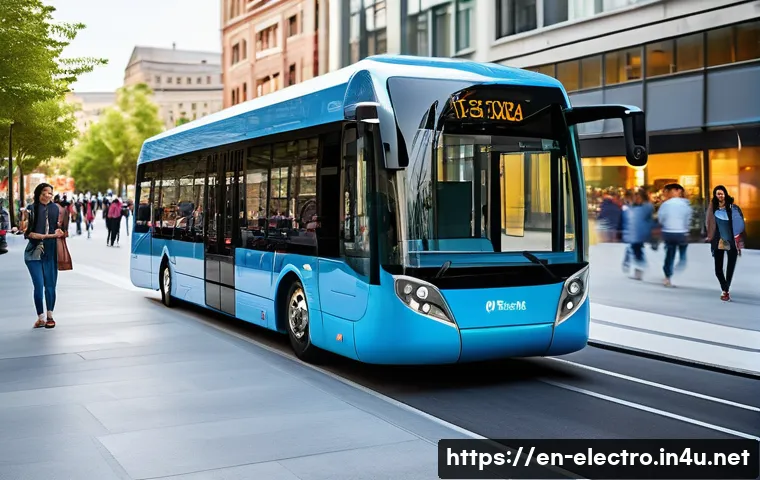
Now, zoom out to the city level. Automatic control systems are the invisible backbone of modern urban living. Traffic management systems use real-time sensor data to adjust signal timings, minimizing congestion and improving commute times. Smart streetlights detect presence and adjust brightness, saving energy and enhancing safety. Water treatment plants use sophisticated control systems to monitor water quality and manage distribution efficiently. Even public transport networks leverage these systems for scheduling, routing, and predictive maintenance of vehicles. The benefits here are massive: reduced energy consumption, improved public safety, optimized resource allocation, and a better quality of life for millions of residents. It’s a testament to how intelligent control can transform complex public services, making them more resilient and responsive to the needs of a growing population.
| Application Area | Key Benefit of Control Systems | Example Technologies |
|---|---|---|
| Smart Homes | Enhanced comfort, energy efficiency, convenience | Smart Thermostats, Automated Lighting, IoT Appliances |
| Manufacturing | Increased precision, reduced waste, improved safety | Robotics, Process Control, Predictive Maintenance |
| Transportation | Optimized flow, improved safety, reduced congestion | Traffic Light Synchronization, Autonomous Vehicles, ATC |
| Energy Grids | Stable supply, efficient distribution, renewable integration | Smart Grids, Demand-Response Systems, Power Plant Controls |
| Healthcare | Precision delivery, remote monitoring, diagnostic support | Robotic Surgery, Patient Monitoring Systems, Drug Delivery |
Navigating the New Frontier: Cybersecurity and Ethical Considerations
As incredible as these advancements in automatic control systems are, especially with the integration of AI, we’d be naive to ignore the significant challenges they present. With great power comes great responsibility, right? And when we’re talking about systems that run our infrastructure, manage our homes, and even make critical decisions, the stakes are incredibly high. I’ve spent a lot of time thinking about this, and while the benefits are clear, we absolutely have to have robust discussions around cybersecurity and the ethical implications. It’s not just a theoretical concern; it’s a very real and present danger that needs proactive solutions. Ignoring these aspects would be a disservice to the incredible progress we’re making and could undermine public trust in these essential technologies. We need to build these systems responsibly, with a clear eye on both the upside and the potential pitfalls, otherwise, we risk a lot.
The Dark Side: Protecting Our Connected World
The more interconnected our control systems become, the more vulnerable they are to cyber threats. A hacker gaining control of a city’s traffic light system could cause chaos; an attack on a power grid could lead to widespread blackouts. Industrial control systems (ICS) that manage critical infrastructure, like water treatment plants or energy facilities, are particularly attractive targets. The potential for disruption, economic damage, and even physical harm is immense. This means cybersecurity can no longer be an afterthought; it must be designed into these systems from the ground up, with layers of protection, constant monitoring, and rapid response capabilities. For someone like me, who’s invested so much in smart home tech, this is a very real concern, and I’m always looking for ways to bolster my own digital defenses. It’s a constant battle, but one we absolutely must win to ensure the integrity and safety of our increasingly automated world.
Who’s in Control? Addressing the AI Ethics Debate
Beyond cybersecurity, the ethical considerations surrounding AI-powered control systems are profound. As these systems become more autonomous and capable of making complex decisions, questions arise: Who is accountable when an AI system makes a mistake? How do we ensure fairness and prevent bias in algorithms that might control everything from loan applications to judicial sentencing? What about job displacement as AI automates more tasks? These aren’t easy questions, and there are no simple answers. It requires ongoing dialogue between technologists, policymakers, ethicists, and the public to establish clear guidelines, regulations, and moral frameworks. We need to ensure that these powerful tools are developed and deployed in a way that benefits humanity, upholds our values, and respects individual rights. It’s a conversation that’s vital to having now, before the technology outpaces our ability to guide it responsibly. It’s a challenge I feel personally invested in as these technologies become more pervasive.
The Future is Now: What’s Next for Autonomous Everything
Honestly, when I look at how far automatic control systems have come, from rudimentary switches to hyper-intelligent, AI-driven networks, it makes me incredibly excited—and a little bit awestruck—about what’s coming next. We’re standing on the precipice of a future where autonomy isn’t just a feature, but a fundamental aspect of almost everything around us. This isn’t just about incremental upgrades; it’s about a complete reimagining of how systems operate and interact, both with each other and with us. The pace of innovation is accelerating at an incredible rate, and staying on top of these trends feels less like a hobby and more like a necessity to truly understand the world that’s unfolding around us. It’s a vibrant, ever-changing landscape, and being a part of this journey is truly invigorating.
The Rise of Autonomous Agents: Beyond Cars
When people think of autonomous systems, self-driving cars usually come to mind first. But that’s just the tip of the iceberg. We’re seeing the rise of autonomous agents across almost every sector. Think about autonomous drones performing inspections of critical infrastructure, navigating complex environments without human pilots. Or robotic assistants in warehouses, optimizing inventory and fulfillment with incredible efficiency. In agriculture, autonomous tractors and harvesters are revolutionizing farming, increasing yields and reducing labor. Even in healthcare, autonomous robots are assisting with surgeries and delivering supplies in hospitals. These systems aren’t just following commands; they’re perceiving their environment, making decisions, and executing tasks with a level of precision and endurance that humans simply can’t match. It’s a shift that will redefine industries and create entirely new paradigms for work and daily life.
Hyper-Personalization: Tailoring Our Tech Experience
One of the most exciting aspects of this autonomous future, from my perspective, is the potential for hyper-personalization. As control systems become smarter and more integrated with AI, they’ll be able to create truly bespoke experiences for each individual. Imagine a home that not only adjusts temperature and lighting but anticipates your mood, plays your favorite music as you walk into a room, and even suggests healthy meal options based on your biometric data and dietary preferences. In a smart city, public services could adapt to individual needs, offering personalized transit options or real-time alerts tailored to your routine. This isn’t just about convenience; it’s about creating environments and technologies that truly understand and cater to our unique preferences, making our interactions with the digital world feel seamless, intuitive, and deeply personal. It’s an exciting, almost futuristic vision of living that’s closer than we think.
Concluding Thoughts
It’s truly mind-boggling to think about how much automatic control systems, and now AI, have permeated every corner of our existence. From the subtle hum of our smart refrigerators to the intricate dance of robotic arms in a factory, these invisible maestros are constantly working to make our lives smoother, safer, and more efficient.
I’ve personally seen the incredible progress, and it makes me genuinely excited for what’s coming next. The journey from simple, reactive switches to proactive, learning, and even predictive systems is a testament to human ingenuity, constantly striving for a more optimized and harmonious world.
It’s a field that’s always evolving, always pushing boundaries, and always offering new ways to enhance our daily experiences.
Useful Insights for a Smarter Life
Here are a few nuggets of wisdom I’ve picked up on this fascinating journey through the world of control systems, hopefully they’ll help you navigate our increasingly automated lives with more confidence!
1. Embrace Smart Home Tech Gradually: Don’t feel pressured to automate everything overnight. Start with one or two devices that genuinely solve a problem or add convenience to your routine, like a smart thermostat or lighting. See how it integrates into your life and expand from there. It’s about enhancing your comfort, not complicating it. The initial setup can be a bit of a learning curve, but the long-term benefits for energy savings and daily ease are truly worth it.
2. Prioritize Cybersecurity on Your Connected Devices: As we discussed, the more connected your world becomes, the more important security is. Always use strong, unique passwords for all your smart devices, enable two-factor authentication whenever possible, and keep your device firmware and apps updated. Think of your Wi-Fi network as the front door to your digital home; secure it with a strong password and consider a guest network for visitors. It’s a habit that protects your privacy and peace of mind.
3. Understand the “Why” Behind Automation: Don’t just automate for the sake of it. Take a moment to understand *why* a particular control system exists or *how* it’s making your life better. Whether it’s the cruise control in your car or the algorithm suggesting your next movie, appreciating the underlying logic can help you use these tools more effectively and intelligently, and even spark your own curiosity about how things work.
4. Seek Energy Efficiency in Controlled Environments: Many modern control systems are designed with energy conservation in mind. Take advantage of features like smart thermostats that learn your schedule, or lighting systems that adjust based on natural light. Actively managing these settings can lead to significant savings on your utility bills and contribute positively to the environment. I’ve personally seen a noticeable dip in my monthly energy costs just by fine-tuning these settings.
5. Stay Informed About AI and Ethics: As AI increasingly powers these systems, it’s vital to stay curious and informed about the ethical conversations surrounding it. Understand how data is being used, be aware of potential biases in algorithms, and participate in discussions about responsible AI development. Our collective awareness is crucial in shaping a future where these powerful technologies serve humanity responsibly and fairly.
Key Takeaways
Diving into the world of automatic control systems truly reveals the intricate intelligence that underpins our modern existence. What started as simple mechanical solutions has blossomed into an incredibly sophisticated network of interconnected, learning, and even predictive technologies. The integration of AI isn’t just an upgrade; it’s a game-changer, allowing systems to anticipate needs, self-optimize, and operate with unprecedented precision and efficiency. We’ve seen how these invisible engineers orchestrate everything from the personalized comfort of our smart homes to the vast, complex operations of entire smart cities, making life smoother, safer, and more sustainable for everyone.
The concept of digital twins is revolutionizing how we design, test, and manage complex systems, allowing us to simulate future performance and prevent issues before they ever arise in the physical world. However, this incredible progress also comes with significant responsibilities. Cybersecurity is no longer an optional add-on; it’s a foundational necessity to protect our increasingly connected infrastructure from malicious threats. Furthermore, the ethical considerations surrounding AI and autonomous decision-making demand ongoing dialogue and clear frameworks to ensure these powerful tools are developed and deployed in a way that truly benefits humanity, without compromising fairness or accountability. The future, rich with autonomous agents and hyper-personalization, is not just arriving; it’s already here, demanding our thoughtful engagement and continuous learning.
Frequently Asked Questions (FAQ) 📖
Q: What exactly are automatic control systems, and why should I care about them now more than ever?
A: Oh, this is such a fantastic question, and one I get a lot! Think of automatic control systems as the silent heroes working tirelessly behind the scenes to make almost everything around us function smoothly, without us having to constantly babysit them.
At their core, these systems are designed to keep something operating exactly how we want it to, even when things try to throw it off track. Imagine your car’s cruise control: you set a speed, and it automatically adjusts the engine to maintain that speed uphill or downhill, without you touching the pedal.
That’s a classic example! But it goes way beyond that. Every automatic control system generally has three key players: a sensor (which observes what’s happening, like a thermometer checking your room’s temperature), a controller (the “brain” that decides what to do based on that information, like your smart thermostat), and an actuator (the “muscle” that actually makes a change, like turning on your furnace or AC).
What makes them so powerful is the “feedback loop” – they continuously monitor the output and make adjustments in real-time to match the desired target.
Why care now? Because we’re in an exciting new era! We’re moving from simple automation to genuinely intelligent systems.
As AI and machine learning weave themselves into these controls, they’re becoming incredibly adaptive, learning, and even predictive. They’re not just reacting to problems; they’re anticipating and preventing them!
This means greater efficiency, better safety, and entirely new capabilities across everything from industrial plants to the devices in your smart home.
It’s truly a foundational technology that’s quietly shaping our future, and understanding it gives you a huge advantage.
Q: How is
A: I truly transforming these systems, and what are some mind-blowing examples I might encounter soon? A2: This is where it gets really exciting, and honestly, a bit mind-bending!
AI isn’t just making existing control systems a little bit better; it’s fundamentally redefining what’s possible. Traditionally, control systems relied on predefined rules and equations, which were great for stable environments but struggled with the unexpected.
Enter AI, especially machine learning and deep learning! With AI, control systems can now learn from massive amounts of data, adapt to changing conditions, and even predict future states.
It’s like giving the system a powerful brain that constantly improves itself. I’ve seen some incredible developments that feel straight out of a sci-fi movie:
First off, predictive maintenance is a huge game-changer.
Instead of fixing a machine after it breaks (reactive) or on a strict schedule (preventative), AI analyzes data from sensors to predict exactly when a component might fail, allowing for maintenance only when truly needed.
This minimizes costly downtime and extends equipment life. Then there are autonomous vehicles, which are perhaps the most visible examples. My friend recently upgraded his car, and the adaptive cruise control and lane-keeping assistance powered by AI are just phenomenal.
These cars use deep learning algorithms to process endless streams of sensor data from cameras and LIDAR, allowing them to navigate complex environments, avoid obstacles, and make real-time driving decisions, constantly learning from every mile driven.
In smart manufacturing, we’re seeing factories where robotic arms don’t just perform repetitive tasks but adapt their movements if a product shifts slightly, or if a tool starts to wear down.
And for energy, AI is optimizing power grids, predicting energy demand, and seamlessly integrating renewable sources like solar and wind, making our energy use so much smarter and more sustainable.
It’s a world where digital twins simulate entire factories, allowing for optimization and problem-solving in a virtual space before applying it to the real world.
These aren’t distant dreams; they’re happening right now, transforming industries and making our everyday lives more efficient.
Q: Are there any downsides or challenges we need to be aware of with these highly autonomous systems, like security or ethical concerns?
A: Absolutely, and it’s a vital part of the conversation! As incredible as these advancements are, they also introduce complex challenges that we, as a society, need to actively address.
I’ve spent a lot of time thinking about these issues, and it’s clear that while the benefits are immense, we can’t ignore the potential pitfalls. One of the biggest concerns is cybersecurity.
As more critical infrastructure – from power grids to transportation networks – becomes reliant on interconnected, AI-powered control systems, they become potential targets for cyberattacks.
A breach in one of these systems could have devastating real-world consequences, far beyond just data theft. Protecting these digital brains is paramount.
Then there are the ethical dilemmas and issues of accountability. When an autonomous AI system makes a decision that leads to an unforeseen or negative outcome, who is responsible?
Is it the developer, the operator, or the AI itself? These are not easy questions, especially when AI systems can make decisions that are difficult for humans to fully understand or predict (the “black box” problem).
Ensuring transparency and explainability in AI decision-making is crucial for building trust and establishing clear lines of responsibility. We also need to consider data privacy.
These intelligent systems thrive on data. How is that data collected, stored, and used? Ensuring privacy and preventing misuse is a constant balancing act.
Finally, there’s the long-standing concern about job displacement. As AI and automation become more sophisticated, they will inevitably take over certain tasks, which could impact employment in some sectors.
While new jobs will undoubtedly emerge, we need strategies to support workers through these transitions. The key here is not to halt progress, but to foster responsible innovation.
We need to prioritize safety, accountability, transparency, and a strong ethical framework as we continue to integrate AI into automatic control systems.
It’s a journey, and we’re all part of shaping its direction.